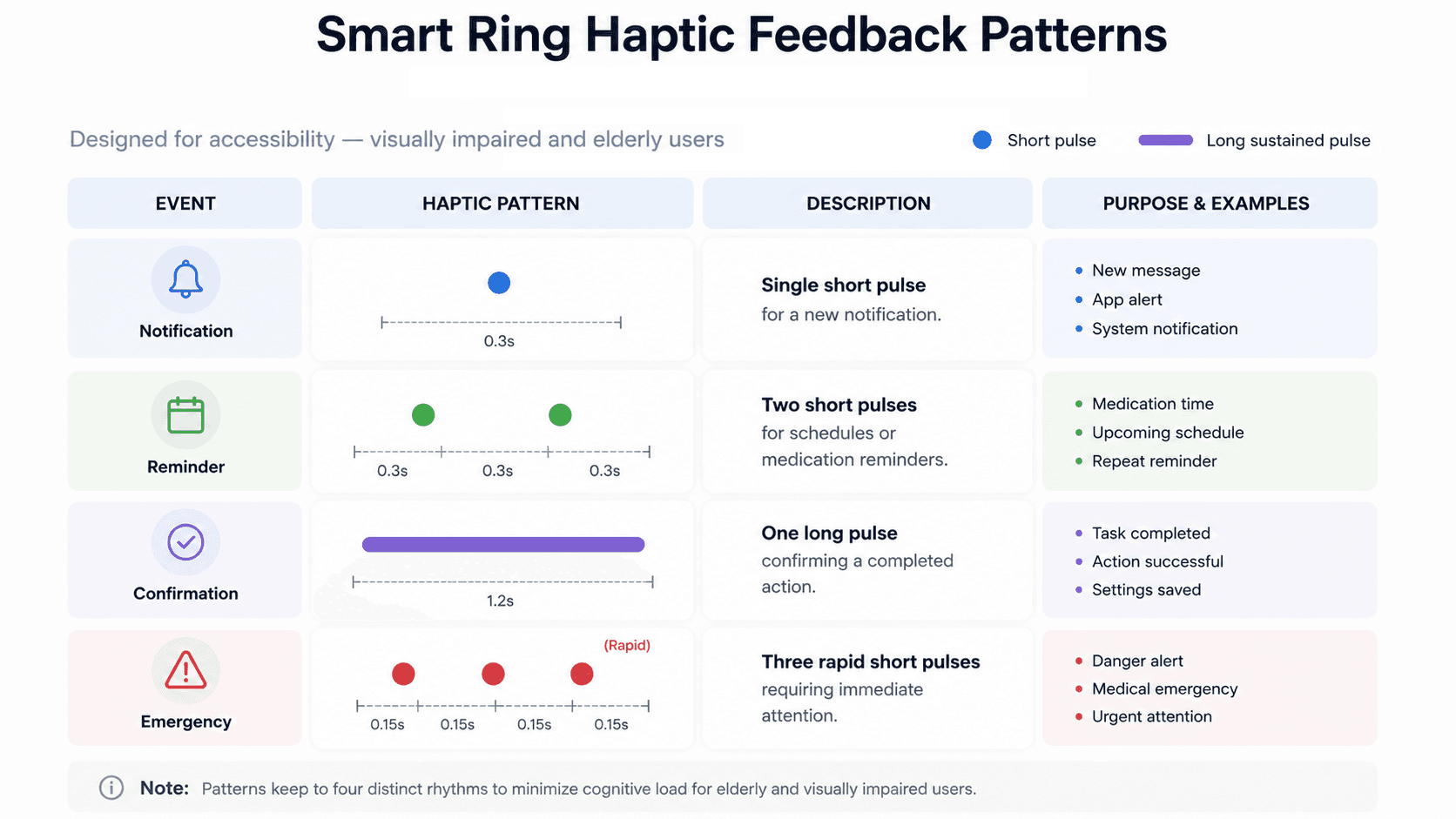
Multimodal Wearable Experience for Low vision
Designed a multimodal wearable ring integrating LLM, gesture controls, haptic feedback, and an invisible UI to support intuitive, non-visual interactions for people with low vision.

Client
Independent project
Role
Product Designer
Period
8 weeks, 2022
Overview
EchoVibe : Time, Schedule & Emergency Assistant for Low Vision
Designed EchoVibe, a multimodal AI wearable that combines LLM conversation, haptic feedback, gesture interaction, and an invisible UI to help people with low vision manage schedules, alerts, and daily navigation with confidence.

8 weeks, 2023
Final Images
Wearable Ring – Patent Filing in Progress
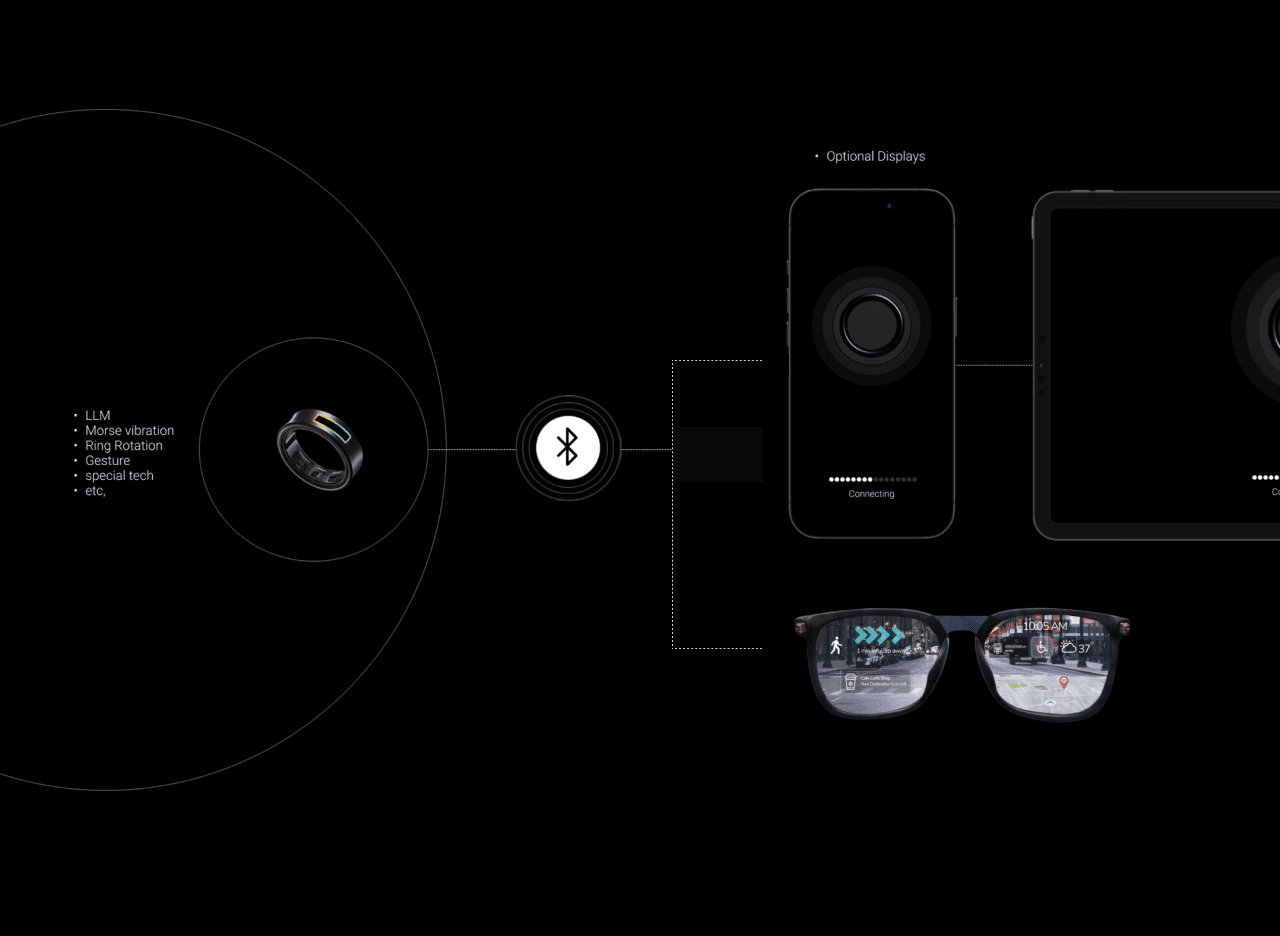
This wearable ring enables non-visual interaction for low-vision users through LLM, haptics, ring rotation, and gesture input. While specific features cannot be disclosed here due to an active provisional patent and an ongoing utility patent process, the design prioritizes intuitive access, temporal awareness, and seamless daily integration.
8 weeks, 2023
Optional high-contrast display
EchoVibe is a non-visual AI interface for low-vision users, combining LLM conversation, Morse code vibration, and optional visuals. Designed to support scheduling and time awareness, it enhances daily planning by 73%—while embracing accessibility without compromising beauty.

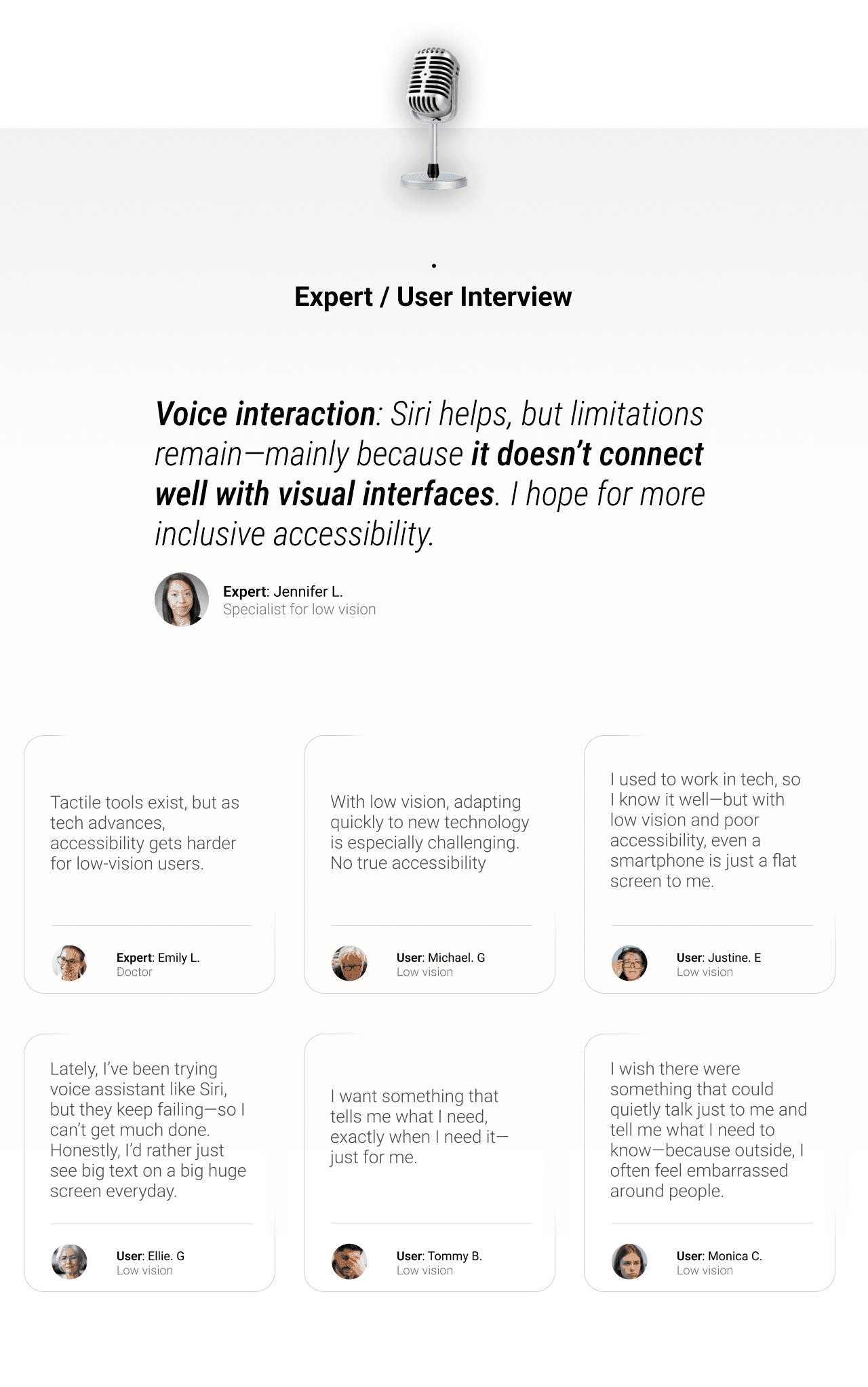
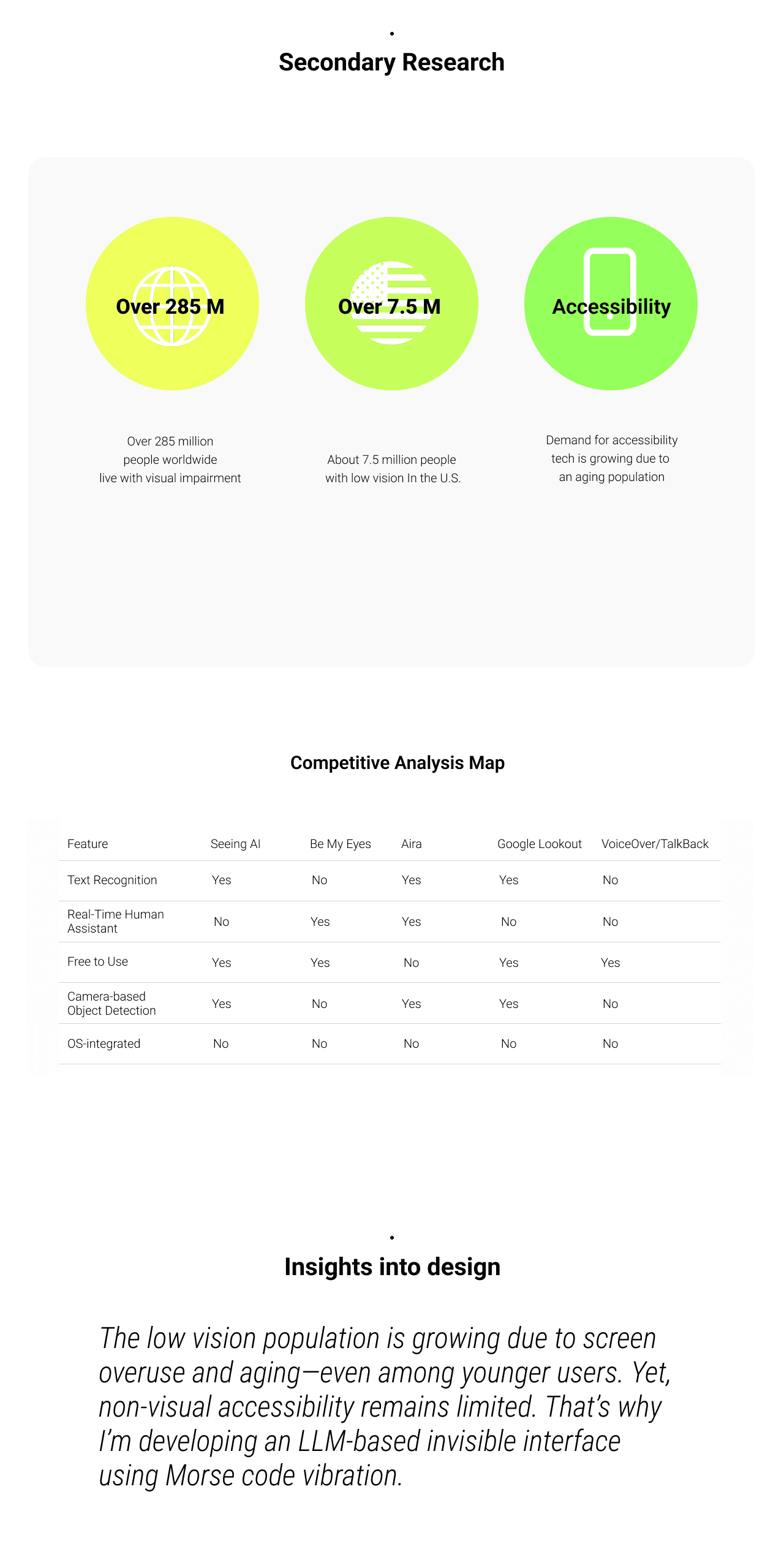
Low-vision users often struggle to access basic time and environmental information, such as sun position, which are essential for daily planning and orientation. However, existing tools lack context-aware, non-visual interaction methods that provide independent and intuitive support in real-world settings.
The goal was to design a non-visual, context-aware AI interface that enables low-vision users to independently access time and environmental cues by combining LLM-powered voice interaction with tactile Morse code feedback—while embracing visual optionality without compromising aesthetic quality.
The system, optimized for six daily scenarios, improved time perception by 73%, enabled independent scheduling for low-vision users, and received a user satisfaction score of 4.7/5 in internal testing—with strong feedback on clarity, comfort, and design aesthetics.